Baue Bots für bekannte Krypto-Börsen, prüfe Risiken und halte jede Trading-Session reportfähig
AssetEngine verbindet No-Code Strategien, Backtesting, Auto-Trading auf bekannten Krypto-Börsen, Risk Guard und ein steuerlich auswertbares Trade Journal zu einem Workflow, der nicht beim Bot endet.
Keine Anlage- oder Steuerberatung. Backtests, Signale und KI-Ausgaben sind technische Hilfen, keine Gewinnzusage.
Automatisiertes Trading für professionelle Krypto-Trader
Baue, teste und automatisiere profitable Strategien für Spot, Futures und Margin Trading – ohne Programmierkenntnisse.
✓ Keine Kreditkarte erforderlich · ✓ In 60 Sekunden startbar · ✓ Jederzeit kündbar
Der AssetEngine Workflow
Nicht nur Bots starten. Bots verantwortbar betreiben.
Der Unterschied zu reinen Bot-Tools liegt im Ablauf: Strategie, Backtest, Risiko und spaetere Auswertung bleiben im gleichen Gedankengang.
Strategie bauen
Indikatoren, KI-Signale, TradingView Webhooks oder eigene Regeln ohne Code kombinieren.
Backtest pruefen
Equity, Drawdown, Trefferquote, Fees und Einzeltrades ansehen, bevor echtes Kapital arbeitet.
Risk Guard setzen
Positionsgroesse, Stop-Loss, Take-Profit, Tagesverlust und Bot-Status bewusst kontrollieren.
Tax-Aware Journal
Bot-Sessions, Signalquelle, P&L, Fees und spaetere Report-Faehigkeit nachvollziehbar halten.
Unterstuetzte Exchanges
Unterstuetzte Exchanges
 Binance
 Bybit
Bybit OKX
OKX KuCoin
 Gate.io
 Bitget
 MEXC
MEXC Kraken
 HTX
HTX BingX
BingX Phemex
Direkt zum Nutzen
Waehle deinen naechsten Schritt
Starte mit einem konkreten Ergebnis: Demo ansehen, Trading-Setup berechnen oder Auto-Trading steuerlich nachvollziehen.
In wenigen Minuten zum Ergebnis
Strategie bauen, Backtest starten, Bot automatisieren und Steuerreport vorbereiten.
Oeffnen ->Trading RechnerRisiko und Bot-Setup berechnen
Positionsgroesse, Risk/Reward, DCA-Kapital und Bot-Profit vor dem Live-Einsatz kalkulieren.
Oeffnen ->Bot-SteuernAuto-Trading bis Steuerreport
Verstehe, wie DCA-Bots, Futures-Bots und Binance-Bot-Trades im Steuerreport landen.
Oeffnen ->Strategie-Templates
Starte nicht leer, starte mit einem getesteten Workflow
Vorlagen zeigen, wie aus Signal, Gate, Backtest, Risk Guard und Steuerreport ein kompletter AssetEngine-Prozess wird.
RSI + EMA Gate
RSI-Signal mit Trendfilter, Backtest, Risk Guard und spaeterem Steuerreport verbinden.
EMA Cross Setup
EMA-Kreuzung als klares Signal testen, optimieren und je Symbol auswerten.
Supertrend Bot
Supertrend, Volumenfilter und OnChain-Kontext als kontrollierten Bot-Workflow nutzen.
DCA Bot Plan
Base Order, Safety Orders, Kapitalbindung und Auswertung sauber vorplanen.
TradingView zu Bot
TradingView Alerts mit Webhook, Audit Timeline, Risk Guard und Reporting verbinden.
KI & OnChain Gate
KI-Signale, BTC-Kontext oder OnChain Score als Filter vor Auto-Trading setzen.
Alles was du für profitables Trading brauchst
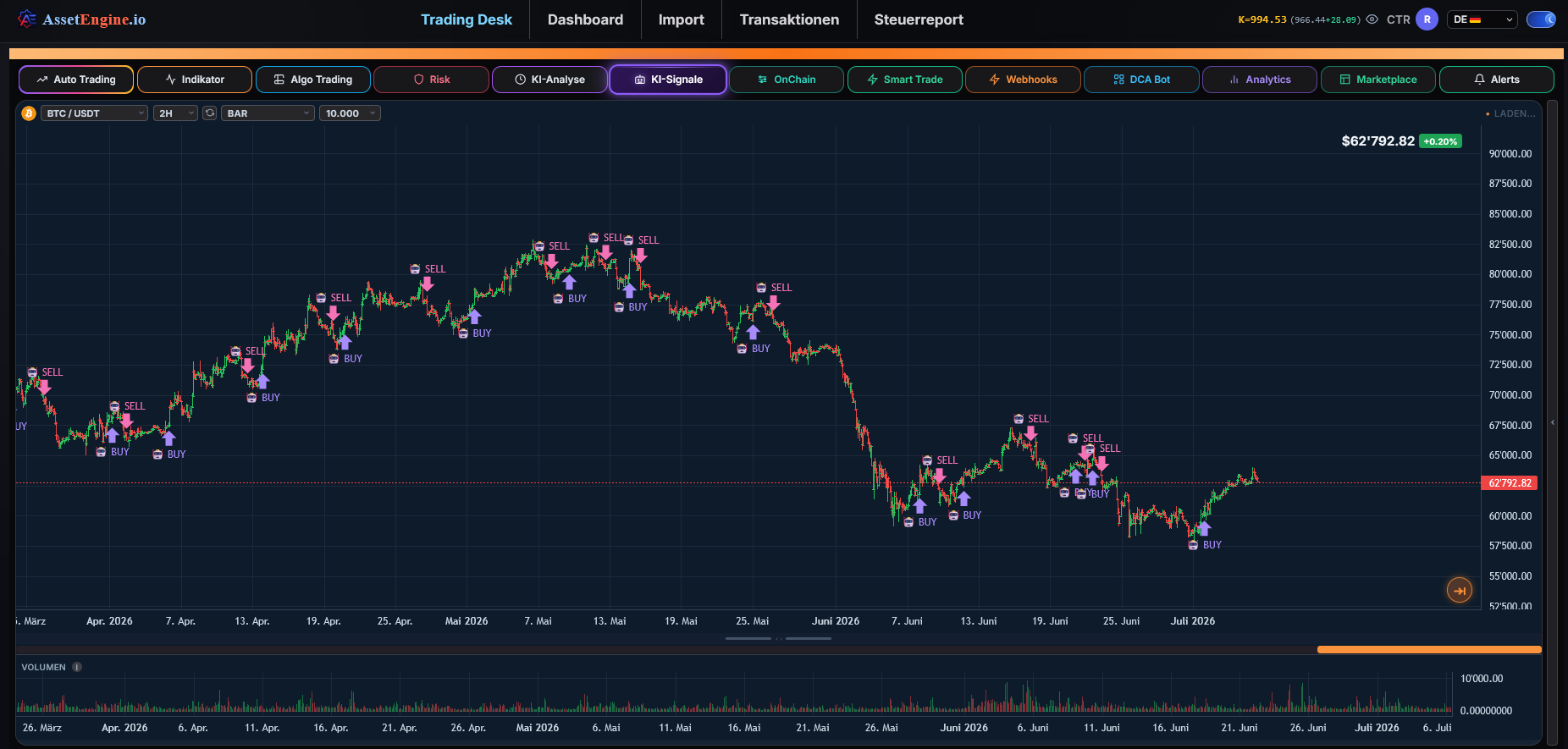
Profi Charts
Professionelle Trading-Charts mit 100+ Indikatoren und Zeichenwerkzeugen
KI Analyse
KI-gesteuerte Marktanalyse und Prognosen für bessere Trading-Entscheidungen
Auto Trading
Automatisiere deine Strategien und lass den Bot 24/7 für dich handeln
Backtesting
Teste Strategien mit historischen Daten und maximiere deine Edge
Strategie Builder
Entwickle komplexe Handelsstrategien visuell – ohne eine Zeile Code
Smart Alerts
Intelligente Alerts für Channels, Signale und Marktbewegungen
Powerful · Intuitive · Zuverlässig
Dein kompletter
Trading Desk
Eine Platform. Alle Werkzeuge. Volle Kontrolle.
- Echtzeit-Marktdaten
- Multi-Exchange Support
- Sichere API-Anbindung
- Cloud-basiert & jederzeit
Durchdachtes Konzept
Warum AssetEngine?
AssetEngine ist nicht nur ein Trading-Bot. Es ist ein kompletter Workflow: Strategie bauen, testen, automatisieren, Risiko kontrollieren und die spaeteren Trades mit CoinTaxReporting nachvollziehbar machen.
Viele Tools stoppen zu frueh
- xnur Signale, aber kein sauberer Bot-Workflow
- xBacktests getrennt von Live-Trading und Risiko
- xkeine OnChain- und Marktstruktur im gleichen Desk
- xkeine natuerliche Bruecke zum Steuerreport
- xmehrere Tools, mehrere Logins, mehrere Kosten
Nutzer sehen nicht nur ein Feature, sondern einen zusammenhaengenden Trading- und Reporting-Prozess.
AssetEngine.io
Trading Desk + KI + Risk + Steuerreporting
No-Code Trading Bot
Strategien aus Indikatoren, Webhooks und Regeln bauen, ohne Pine Script oder eigene Bot-Server.
Backtest vor Live
Ideen erst mit Performance, Drawdown, Trefferquote und Equity-Verlauf pruefen.
Risk Guard
Offene Auto-Trades, Limits, Tagesverlust und Positionsrisiko im gleichen Desk kontrollieren.
OnChain Intelligence
Whales, Exchange Flows, Stablecoins, Unlocks und Marktstress als Kontext fuer Signale nutzen.
Steuerreporting integriert
Bot-Trades, DCA-Sessions und Exchange-Historien koennen mit CoinTaxReporting weitergedacht werden.
Faire Preise
Ein durchdachtes Paket aus Trading Desk, Automatisierung, Auswertung und Reporting statt Tool-Sammlung.
KI, Indikatoren, Algo-Regeln und Gates in einem Workflow
Trend, Marktphase, Preisbereiche und Signalstaerke als zusaetzlicher Kontext.
Buy- und Sell-Impulse koennen direkt im Trading Desk bewertet und ueberwacht werden.
Indikatoren liefern Signale, AssetEngine verbindet sie mit Bot-Logik und Risiko-Regeln.
Mehrere Bedingungen, Indikatoren, Timeframes und Regeln lassen sich flexibel kombinieren.
Strategien koennen nach Markt, Symbol, Zeitraum und Signalqualitaet getrennt gedacht werden.
BTC, KI-Signale oder OnChain Score koennen als Gate festlegen, ob ein Setup handeln darf.
Warum AssetEngine?
Andere Tools
- ✗Kein KI-gestützter Analyse
- ✗Kein Strategy Builder
- ✗Manuelle Strategie-Ausführung
- ✗Keine komplette Portfolio-Übersicht
AssetEngine.io
- ✓KI + KI-Automatisierung
- ✓No-Code Strategy-Builder
- ✓Spot, Futures & Margin
- ✓Backtesting & Performance-Tracking
API-Keys ohne Withdrawal-Rechte nutzen
Risk Guard vor Live-Trading pruefen
7 Tage kostenlos testen
Bot-Trades spaeter nachvollziehbar reporten